Over the past couple of weeks, we’ve been exploring Savasana—not simply as the pose at the end of yoga class, but as a practice of making room for rest.
First, we considered whether we have to wait for yoga class to give ourselves that time. Then last week, we noticed that even when we lie down, we may still be holding tension in our bodies.
This week, I want to take that one step further:
What does it take to actually allow yourself to be supported?
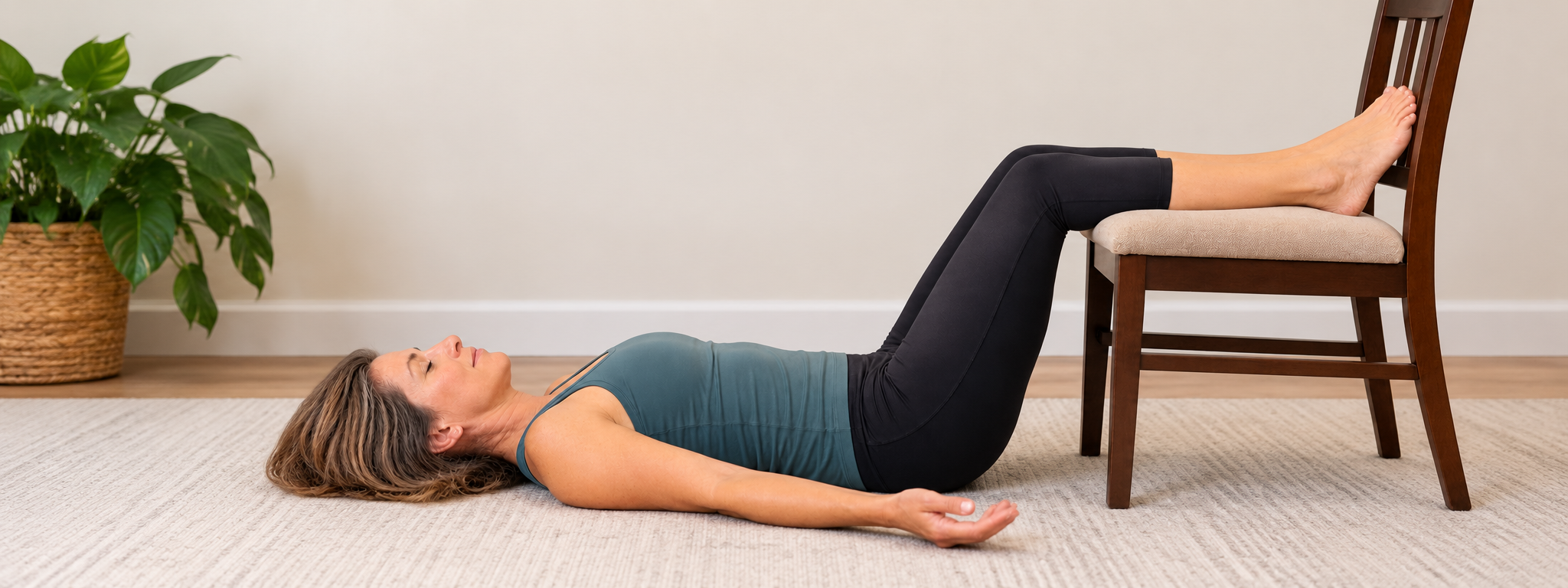
One way to explore that is with a variation of Savasana where you lie on your back with your legs resting on the seat of a chair.
Let the chair do the work
If you’re comfortable getting down to the floor and lying on your back, this can be a wonderful way to explore support.
But there’s an important little detail.
Bring yourself close enough to the chair that the backs of your knees reach the seat. If you’re too far away, your legs may lift slightly away from the chair—and suddenly your muscles are doing some of the work the chair could be doing for you.
You can look supported and still be doing some of the holding yourself.
Once you’re settled, notice how your legs feel.
Can they soften into the chair?
Can you allow its support rather than working to keep your legs in position?
Work with what you have
The chair I use in the demonstration has an opening in the back. If yours doesn’t, simply turn it around so you can position yourself at the open side of the seat.
You can allow your arms to rest out to the sides in whatever position feels comfortable.
Then notice.
Your shoulders. Your legs. Your breath.
Where are you still making an effort that you might be able to release?
And remember, this particular variation requires getting down to the floor. If that isn’t comfortable or accessible for you, you don’t need to practice Savasana this way. Rest can happen in another comfortable position that works for your body.
What does it feel like to be supported?
Most of us are pretty good at supporting other people. We may not be nearly as practiced at recognizing when we need support ourselves, asking for it, or allowing ourselves to receive it.
But being supported doesn’t always mean waiting for someone or something else to take care of us. Sometimes we have to take responsibility for creating the support we need.
I think Savasana can teach us something about that.
Putting your legs on a chair doesn’t automatically mean they’re relaxed. First, you have to get the chair. Maybe you need a blanket under your head or an eye pillow. You may need to move your body a little closer, adjust your position, give your arms more room, or make another change until you find what actually allows you to settle.
There’s nothing wrong with taking the time to do that.
In fact, there’s something powerful about recognizing, This is what I need in order to rest, and then giving yourself permission to create it.
Maybe that’s true beyond Savasana, too.
Sometimes support is offered and we have to allow ourselves to receive it. Other times, we have to ask for what we need. And sometimes we have to create that support for ourselves.
That might mean setting a boundary, making an adjustment, or simply taking the time to recognize what would make things a little easier.
Savasana gives us a place to practice that.
Get the chair. Grab the blanket or eye pillow. Move around until you’re comfortable. Give your arms and legs enough room to relax.
Take responsibility for creating the support you need—and then allow yourself to receive it.
You deserve the rest.
Continue exploring with me
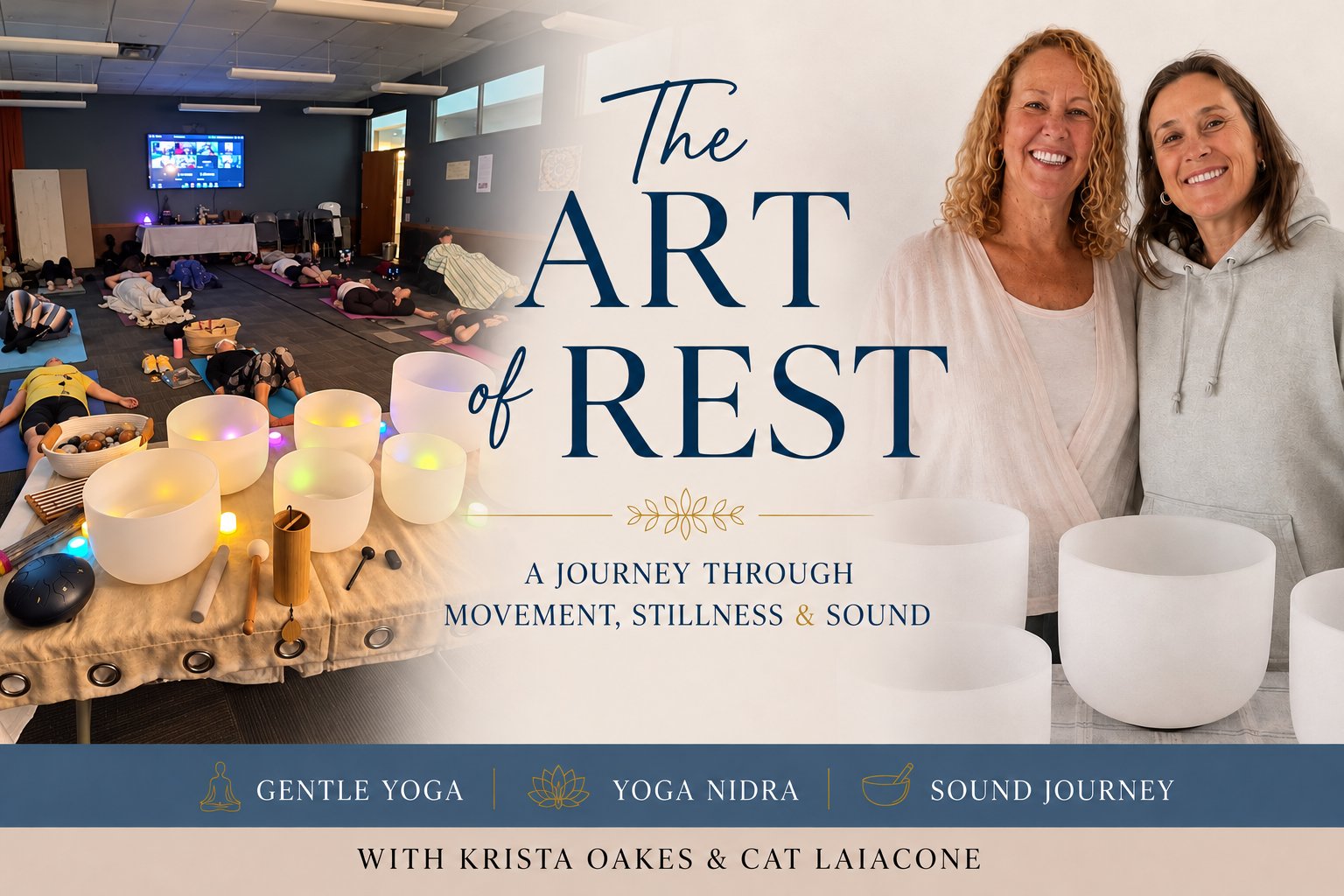
This Saturday, November 7, I’m offering The Art of Rest at 11:45 a.m. Eastern, in Port Orange and live online.
If you’re joining me online, part of the practice may begin before we even start. You may need to create a little space for yourself, gather whatever will help you feel comfortable, let the people around you know that this time is yours, and give yourself permission to be unavailable for a little while.
That, too, is part of making room for rest.
Whether you join me in Port Orange or from home, you’ll have options throughout the experience, and getting down to the floor is not required. This isn’t about finding the “right” way to rest. It’s about taking the time to discover what helps you rest—and giving yourself permission to create the conditions you need.
Read more about The Art of Rest
And for today, perhaps ask yourself:
What support do I need—and what can I do to create it?